


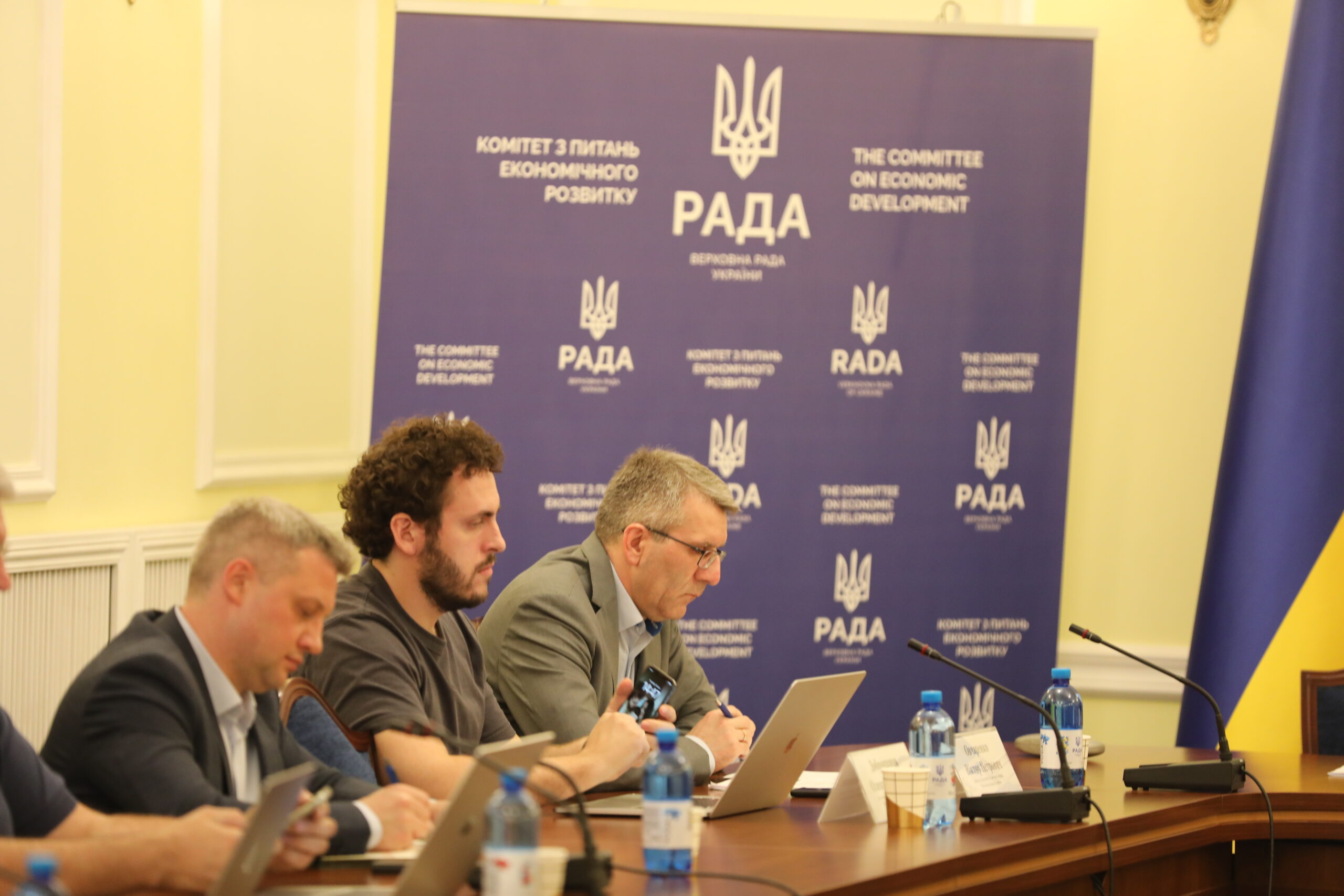
The Verkhovna Rada Committee on Economic Development held a roundtable discussion on the advantages and disadvantages of different taxation systems
On June 19, 2025, a roundtable discussion on “Advantages and Disadvantages of Different Taxation Systems in Ukraine” was held in Kyiv, organized by the Verkhovna Rada Committee on Economic Development. The event brought together representatives of the government, business community and experts to discuss key issues of the state’s tax policy.
Dmytro Natalukha, Chairman of the Committee on Economic Development, emphasized the importance of basing tax policy on real numbers, not emotions.
“Without understanding the current state of affairs, it is very difficult to plan something for the future. Then it turns out that we are deceiving ourselves,” he said, emphasizing the need for fundamental changes in the taxation system to increase the country’s competitiveness.
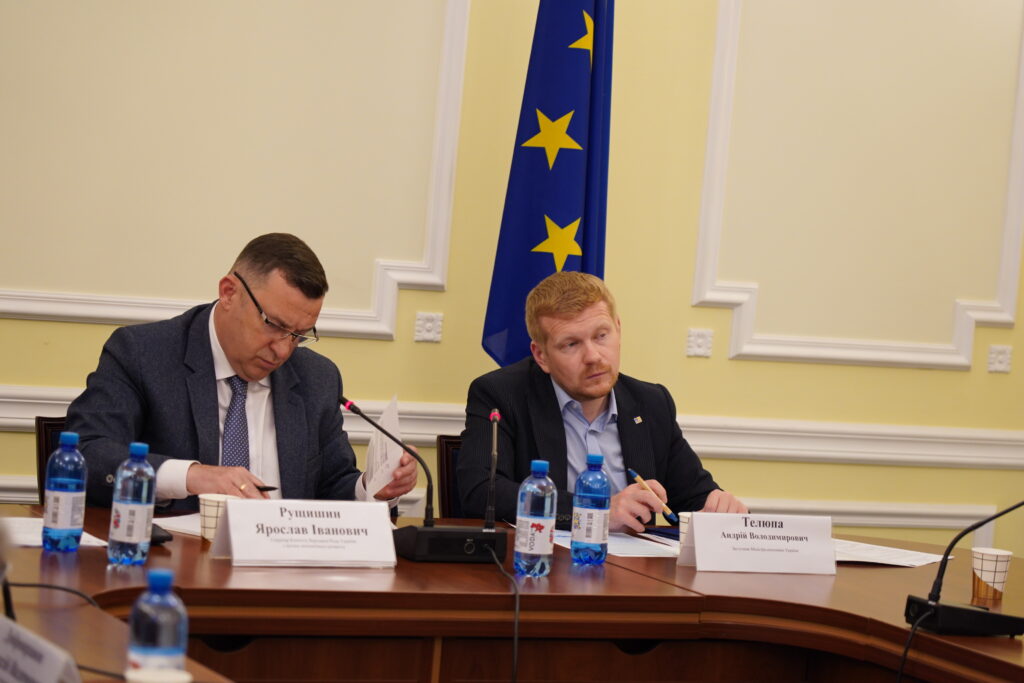
Yaroslav Rushchyshyn, Secretary of the Committee on Economic Development, moderated the discussion and emphasized the need to reach a consensus on the future of the taxation system. He urged the participants to provide concrete proposals for legislative changes and work towards a fair tax system.
Andriy Teliupa, Deputy Minister of Economy of Ukraine, presented the results of the survey through the Pulse system: in May 2025, more than 100 thousand ratings were collected from entrepreneurs (73% – individual entrepreneurs, 27% – the general system). The average rating of business conditions was 6.36 points out of 10. The main problems of business are the high tax burden (27% of respondents) and unpredictable government actions (25%).
“The OECD presented a study that the main problem is not a high tax burden, but a very complex administrative burden – up to four times more hours of business participation than in OECD countries,” the Deputy Minister said. The Ministry supports the simplification of the general system, the implementation of the European Directive on Unfair Trade Practices and is ready to consider extending the National Cashback to the simplified system.
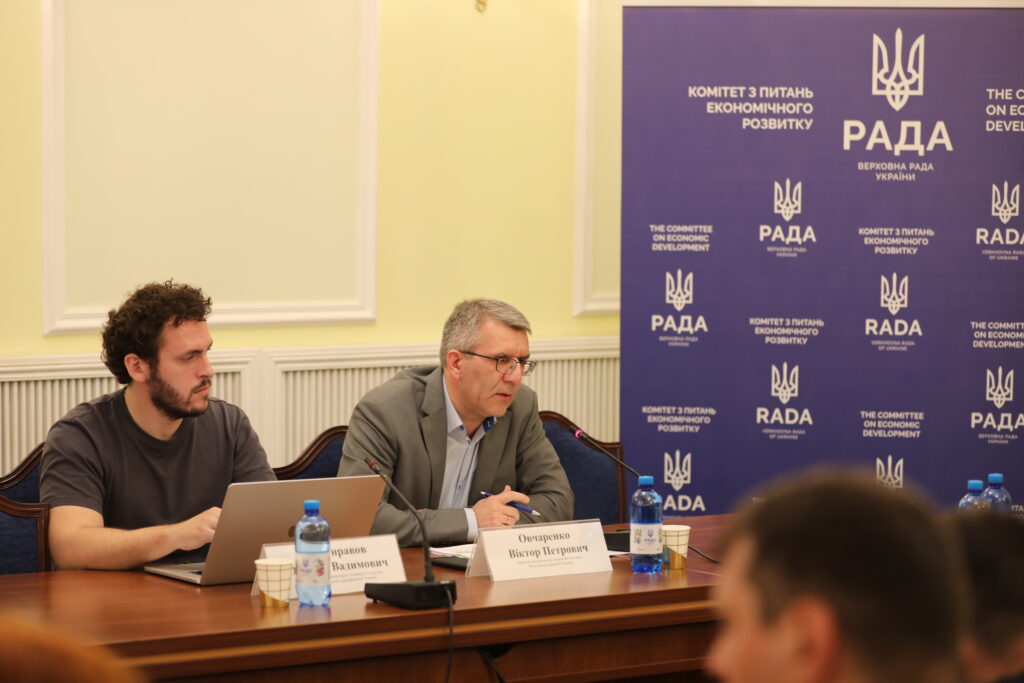
Viktor Ovcharenko, Director of the Tax Policy Department of the Ministry of Finance, provided detailed statistics: as of January 1, 2025, 84.8% of legal entities are under the general taxation system, 15.2% are under the simplified taxation system. Among individual entrepreneurs: 22% are on the general taxation system, 78% are on the simplified taxation system. In 2024, legal entities under the general taxation system accounted for 95.2% of tax revenues. The director of the Tax Policy Department of the Ministry of Finance assured that the National Revenue Strategy does not provide for the destruction of the simplified system, but only minimizes the abuse of big business. He also confirmed the readiness of the Ministry of Finance to amend Resolution 1165 to improve the procedure for suspending the registration of tax invoices.
Oleksiy Dobronravov, Deputy Director of the IT Industry Development Directorate of the Ministry of Digital Transformation, reported on the successes of Diia City: about 2000 resident companies, more than 100 thousand specialists, and an increase in tax revenues from UAH 4.1 billion in 2022 to UAH 18.2 billion in 2024. Oleksiy Dobronravov emphasized that after acquiring residency, companies stop using optimization schemes and salaries in envelopes.
Kateryna Podust, Head of the e-Residency Expert Group at the Ministry of Digital Transformation, spoke about the U-Residency program to attract foreign small entrepreneurs. Over six months, more than 1500 applications have been received, and 102 e-residents have been registered. The program provides for a 5% single tax rate for foreigners without a physical presence in Ukraine, and the bank acts as a tax agent.
Borys Emeldesh, President of the All-Ukrainian Professional Association of Entrepreneurs, raised the fundamental problem of unfair accusations against small businesses: “Big business uses small business to evade taxes. Why do we want to abolish the simplified taxation system instead of fighting against violators?”
He revealed statistical manipulations: “If we compare the amount paid by small and large businesses in absolute terms, of course, large businesses pay more, but if we compare it to turnover, the picture is different.”
Among the key proposals are: to adopt a draft law on criteria for labor relations to combat the “sole proprietorship instead of hiring” scheme; to raise the threshold for switching to VAT from UAH 1 million, which has not been indexed for 15 years and should be about UAH 4 million after indexation for inflation.
Volodymyr Kutsenko, Senior Investigator at the Business Ombudsman Council, said that more than 60% of complaints relate to tax issues, which confirms the crisis of confidence in the tax system.
“We see that the tax authorities place the greatest emphasis on companies of the general system, while those who really abuse the simplified taxation system are difficult to reach, either because they lack time or tools,” he explained the distortions in law enforcement. The main problem is that the “white” sector of the economy suffers from extremely high pressure, while the real offenders remain unreachable.
Volodymyr Dubrovsky, Senior Economist at CASE-Ukraine, systematically refuted the myth of the simplified taxation system as a privilege.
“The view of the simplified taxation system as a benefit is a stereotypical view that is not true,” he said and explained the real goals of the simplified taxation system: saving on fixed costs (accounting for microbusinesses is impossible with such income), non-discretionary (it does not allow manipulation by either the payer or the inspector), de-shadowing of the economy and creating a competitive environment. Volodymyr cited calculations based on the State Tax Service and the State Statistics Service, according to which the tax burden on the general system last year amounted to 3.4% (VAT + PIT + PAYE to turnover). At the same time, sole proprietors of the STS of the 3rd group pay 5% of the turnover.
Volodymyr Dubrovsky recalled a historical lesson: “Under Azarov, 2.2 million jobs were lost, they went into the shadows when they tried to destroy the simplified system.” According to his estimates, the scheme “FOP instead of hiring” concerns only about 30-40 thousand people, not millions, as critics claim.
Oleh Hetman, Coordinator of the Economic Expert Platform, presented the results of a study of the tax burden in retail trade based on official data from the Territory of High Confidence website. It turned out that the third group of the STS single tax has a much higher tax burden than similar enterprises under the general system. “The website of the State Tax Service ”Territory of high level of trust” contains data on the tax burden on the general system by specific KVED. In retail, this burden (VAT + PIT to turnover) for common KVEDs is 3.09%-3.46%.”
“The simplified taxation system is not a privilege, but often even a higher burden than the general system,” the expert stated. Oleg Getman also spoke about discrimination through the national cashback: the state, as the National Cashback Service, has created an advantage for big business over small business. The key proposal is to immediately extend the National Cashback to the simplified system or cancel it for everyone.
Andriy Yerashov, head of the analytical center of the Union of Ukrainian Entrepreneurs, warned against the catastrophic consequences of the massive abolition of hiring from individual entrepreneurs: out of 9.9 million employees, 2.59 million work for individual entrepreneurs, and there are simply no alternative jobs. The expert emphasized the importance of government programs to support veteran businesses, which are designed specifically for individual entrepreneurs. Key proposals: to adopt the draft law No. 5466 on incentives for sole proprietors to employ people; to urgently amend Resolution No. 1165 to minimize its negative impact on business.
Myroslav Laba, an expert at the Union of Ukrainian Entrepreneurs think tank, drew attention to the burdensome and complexity of the general taxation system in Ukraine and cited data from a World Bank study that shows significant deviations in the costs of businesses that are on the simplified and general taxation systems. He also noted that according to research by the ISET and CASE Ukraine think tanks, the country’s budget loses UAH 450-500 billion a year due to existing tax evasion schemes. “In an attempt to increase budget revenues, the government is taking the wrong approach – it is raising taxes on micro businesses instead of simplifying tax administration in the general taxation system and de-shadowing the economy. We are losing hundreds of billions of hryvnias due to the shadow economy, while the Ministry of Finance has introduced an 800 hryvnia military tax on individual entrepreneurs,” Myroslav said.
Also, in his speech, M. Laba focused on the analysis of the strategies for reforming the public finance system, which provided for the implementation of a number of targets by the Ministry of Finance and the Ministry of Digital Transformation (reduction of business expenses for tax accounting to 275 hours per year in 2024, business satisfaction with the actions of the tax service at 78%, the share of IT services of the Ministry of Finance within the framework of IT centralization at 75%, the introduction of automatic access rights tracking systems at 60%, and others, which are currently much lower than planned.
He noted the following issues among the wishes of business to the CEBs::
- be consistent and responsible in fulfilling their obligations;
- honest Ministry of Finance and the State Tax Service of Ukraine.
- presumption of innocence of business;
- responsibility of tax officials;
- simplification of accounting, reporting and other bureaucracy, abolition of mandatory acts of work performed;
- introduction of KPIs of efficiency of the tax and customs service;
- conducting an objective (independent of the State Tax Service) survey of taxpayers;
- centralization and automation of the tax service’s services;
- transferring the SISMS from a blocking mechanism to an analytical mode of operation;
- opening public data managed by the tax service;
- putting things in order with a single account for paying taxes, free software cash registers, simplifying tax reporting, and APIs for data exchange between tax and banking institutions.
Denys Paramonov, a representative of the Meat Industry Association and owner of SMK Group, revealed the specific consequences of cashback discrimination: “We are producers, 80% of our clients are individual entrepreneurs who have been left out of the program, and 20% of our clients, large chains, receive preferences through the National Cashback Program. As for small and medium-sized enterprises with only sole proprietorships in their portfolio, it’s difficult for them.” Sole proprietors are particularly affected: “If a sole proprietor has produced, for example, sausage and sells it on the market, he receives nothing at all.” Denys also raised the problem of unfair trade practices of large chains: marketing bonuses, retro bonuses and other pressure tools that “have skewed even medium-sized businesses, not just small ones.” He emphasized that the war complicated the situation: “We didn’t understand how to work with retail chains properly, and now they have been given even more power.”

Oleksandr Spasichenko, deputy director of the Meat Industry Association, proposed a concrete solution through the implementation of European Directive 2019/633: “We can literally take the theses for our legislation, which clearly states that those who have a stronger negotiating position (large chains) cannot give an advantage to those who do not (individual entrepreneurs, small entrepreneurs). As part of the movement towards Europe, harmonization of legislation, we can always refer to this directive.”
Oleksandr Baldynyuk, President of the Ukrkondprom Association, called for the implementation of Directive 2019/633/EU on the prevention of unfair trade practices.
He pointed out that unfair trade practices lead to net economic losses, in particular, when the manufacturing sector is forced to finance commercial risks that it cannot manage.”
Oleksandr Baldynyuk emphasized that Directive 2019/633/EU was designed to address such situations and create fair rules for all market participants.
He emphasized that in this case, it is not about restrictions or pressure on business entities, but about establishing a transparent and fair framework for interaction between the parties – to avoid practices that undermine trust and stability throughout the supply chain.
This is especially relevant for Ukrainian producers, who are often forced to accept long delays in payments, while their European competitors operate in a more secure environment and have access to cheaper credit resources.
“The implementation of European standards will help ensure a level playing field for Ukrainian producers and increase transparency in the trade sector,” summarized the EBA President.
Oksana Prodan, Head of Fortecia Business Association, suggested a systematic approach: “Let’s recognize that all three systems (general, simplified and Diia City) are needed, but each serves a different purpose. Since 1998, when the simplified system was created, nothing has been done to improve the general system. All they did was to make the simplified system worse.”
She explained the functional distinction: “The simplified system for domestic use, which is prohibited in foreign economic activity, is for those who work here and develop Ukrainian production. The general system is for those who grow and move on.”
Key proposals: recognize the need for all systems; simplify the general system (including raising the threshold for switching to VAT); ensure equal rights for simplified taxpayers; make detailed requests to the Ministry of Finance with a breakdown of statistics by group.
Lesia Kashpur, representative of the Association of Taxpayers of Ukraine, noted that the simplified taxation system should not be eliminated, but modified so that its use is available to individual entrepreneurs who carry out their own activities, producing goods and services themselves, for example: hairdressers, shoe repair, making duplicate keys, etc. It is necessary to make appropriate changes to the list of codes of economic activities.
Yaroslav Rushchyshyn asked to provide a written justification with calculations, as these entities do pay taxes according to the law.
In his closing remarks, Andriy Teliupa, Deputy Minister of Economy of Ukraine, reiterated the Ministry’s position on key issues: maximum support for simplification of the general taxation system and its administration. As for the STS, he explained the position of international partners and the EU: “They always have two problems – ”tax arbitration“ and ”individual entrepreneurs instead of hiring”. If we show that we are solving these problems, there will be much fewer or no questions about the simplified system.”
The Deputy Minister of Economy of Ukraine also confirmed his maximum support for the implementation of European Directive 2019/633 on unfair trade practices and his readiness to model the extension of cashback to the simplified taxation system and extend it to the simplified taxation system if it does not create new significant risks of manipulation. “At the recent screening of SMEs by the European Commission, the only comment from the EC to Ukraine was regarding the still unimplemented EU Directive 2019/633,” said A. Teliupa.
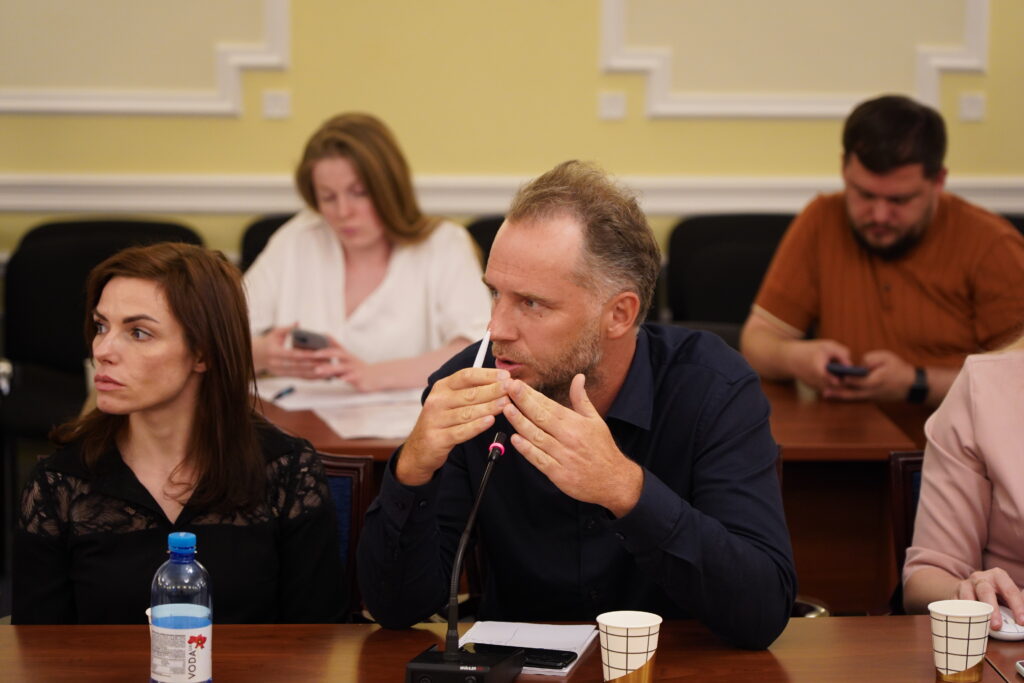
Following the discussion, MPs and leaders of leading business associations agreed to further cooperate and jointly implement projects important for economic recovery. The Committee on Economic Development is ready to work on the legislative implementation of the agreements reached, ensuring a fair balance between the fiscal needs of the state and the interests of all forms of business.

